Case study · Master's thesis
Electric Scooter Wheelchair
Design and proof-of-concept of the integration of an electric scooter with a wheelchair: from the mechanical design to the firmware upgrade.
- Period
- 2020 — 2021
- Context
- Master's thesis · Sapienza University of Rome
- Outcome
- Graduated 110/110
- Technologies
- Python · C · Firmware · Fusion 360 · 3D printing

The problem
Electric scooters made urban mobility light and accessible — but only for people who can stand. The goal of this thesis was to extend that possibility to wheelchair users without distorting either vehicle: both had to remain fully usable on their own.
The mechanical coupling
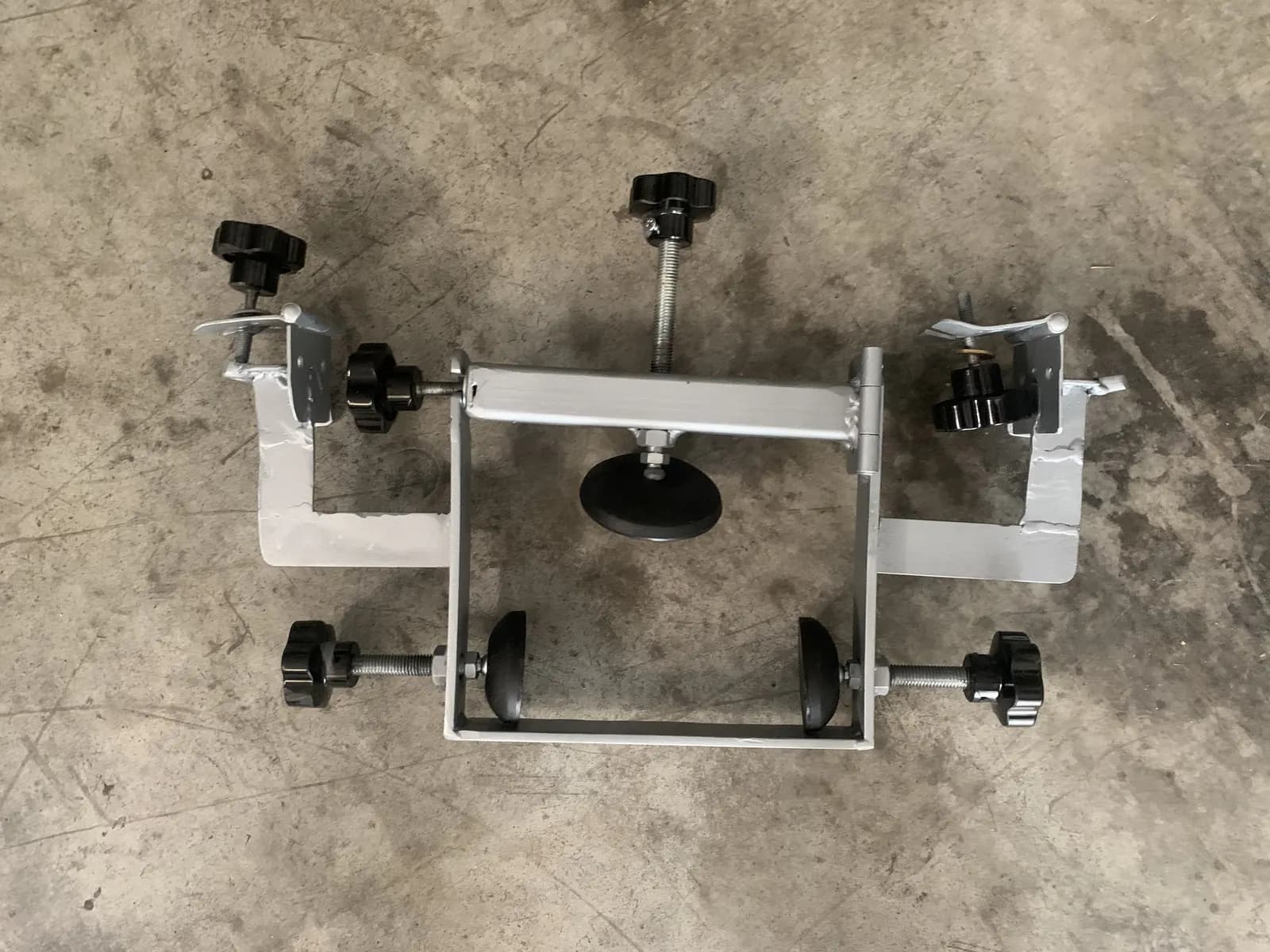
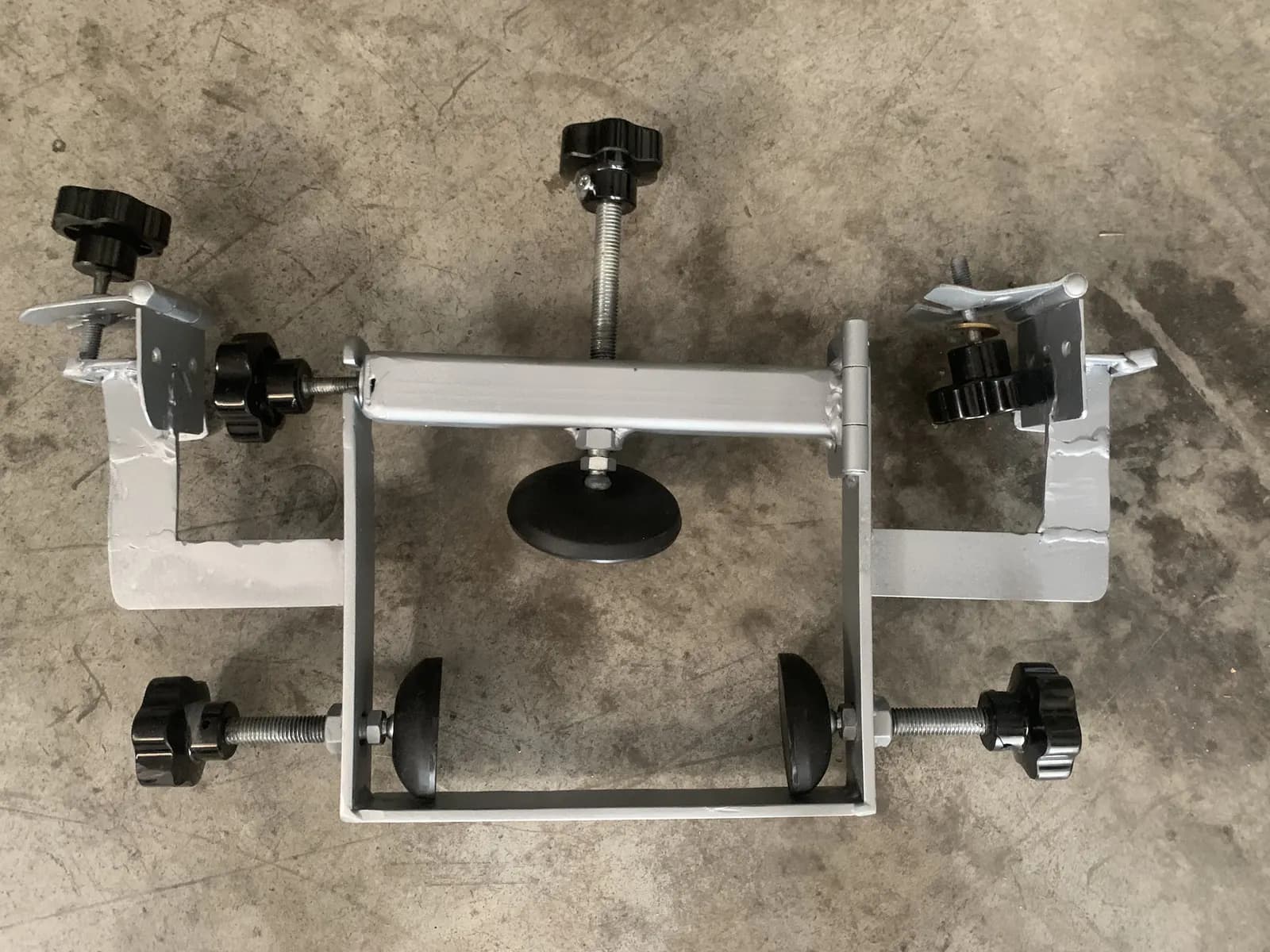
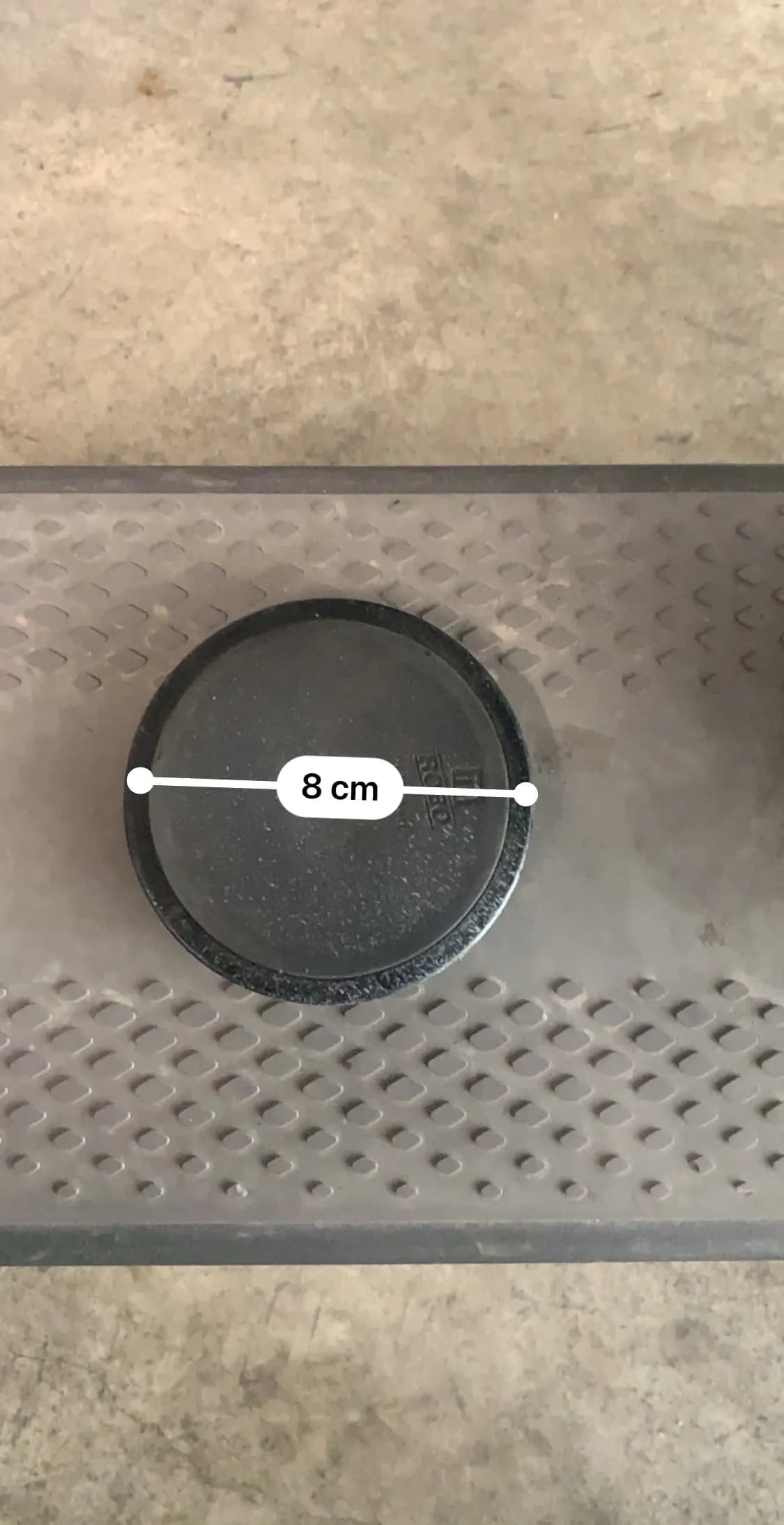
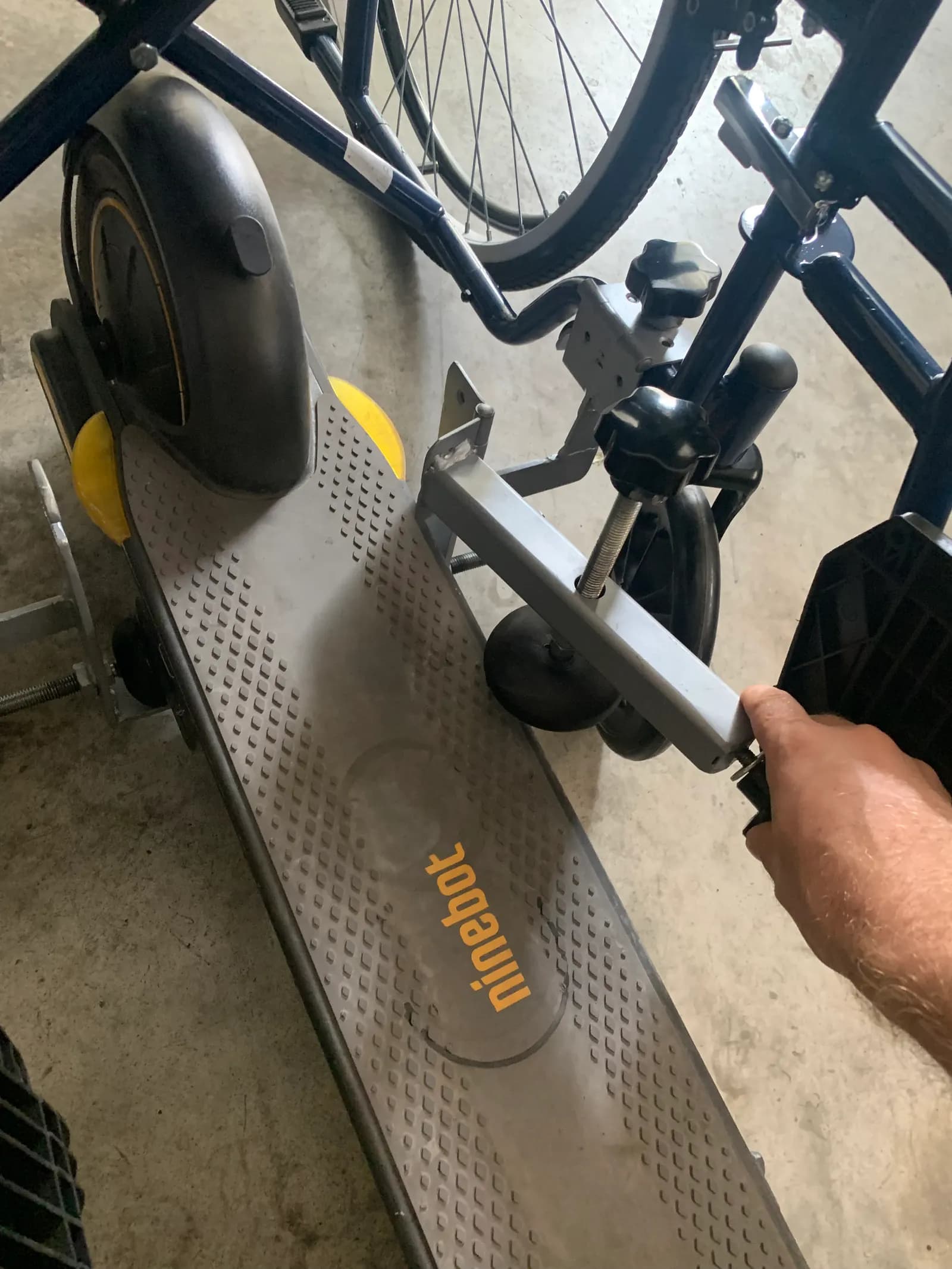
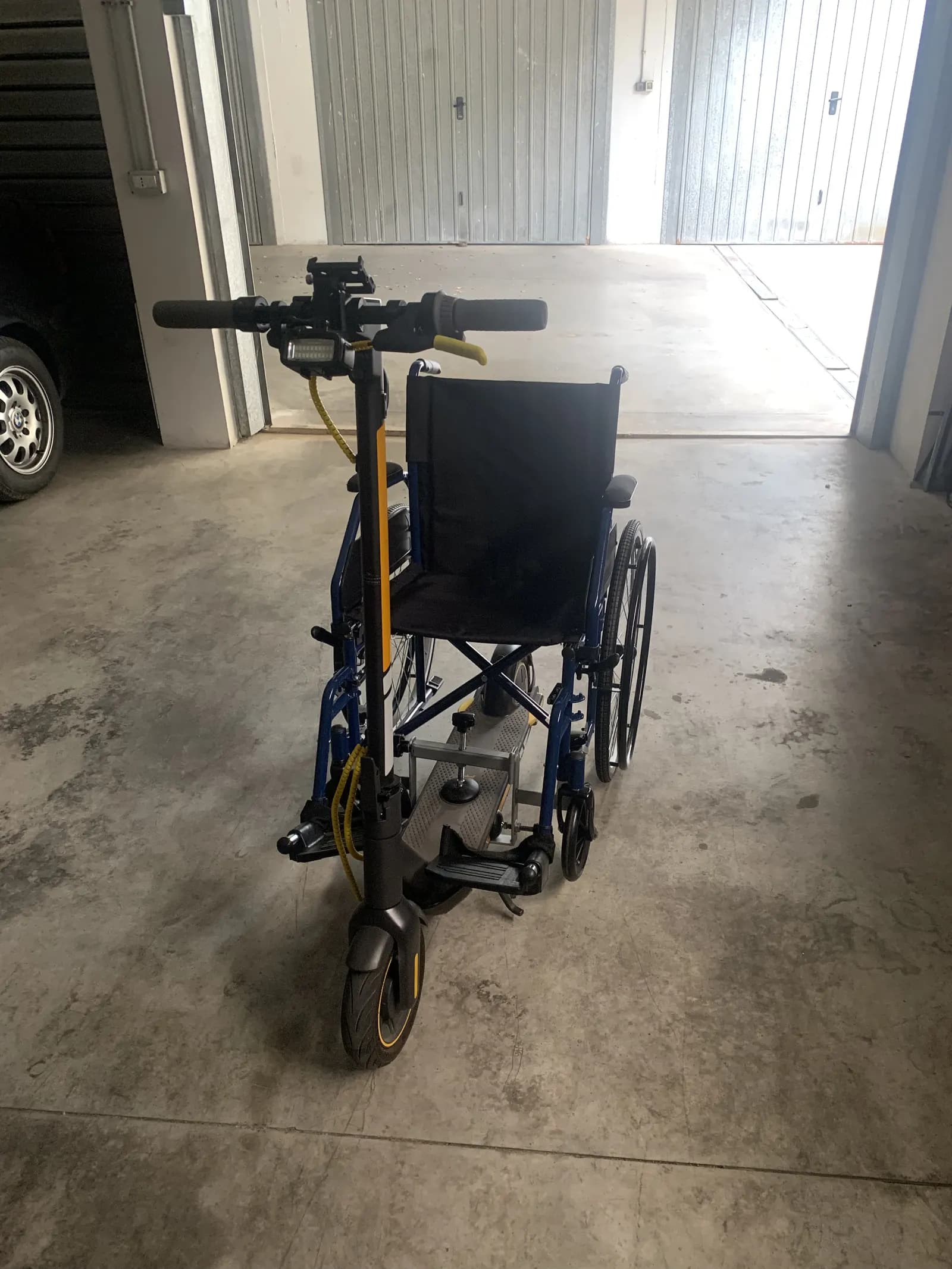
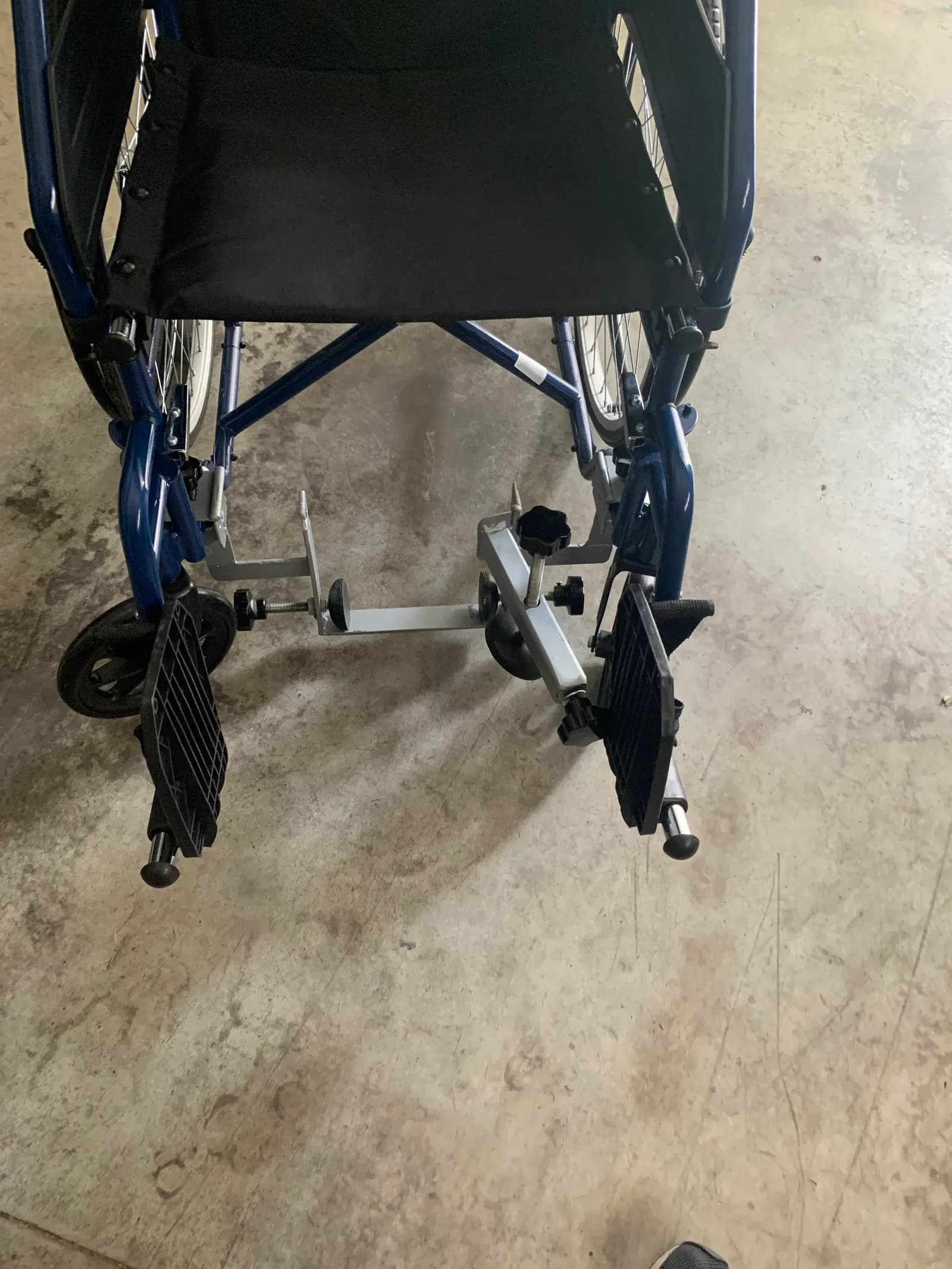
The mechanical core is a CAD-designed bracket installed at the base of the wheelchair, near the rear wheels. A moving part with knobs, threaded bars and 3D-printed nylon anti-vibration pads locks the scooter against the longitudinal and lateral forces of acceleration, braking and steering. A steel hinge lets the scooter slide under the wheelchair without lifting it, and the front casters are raised off the ground so traction and steering are handled entirely by the scooter.
The firmware
The scooter's stock firmware is calibrated for a standing rider on the deck. With a wheelchair attached, mass, center of gravity and weight distribution all change: the software side of the thesis involved modifying the firmware and creating an acceleration algorithm suited to the new load, with a Python client and a graphical interface to automate the generation of the custom firmware.
Experimental results
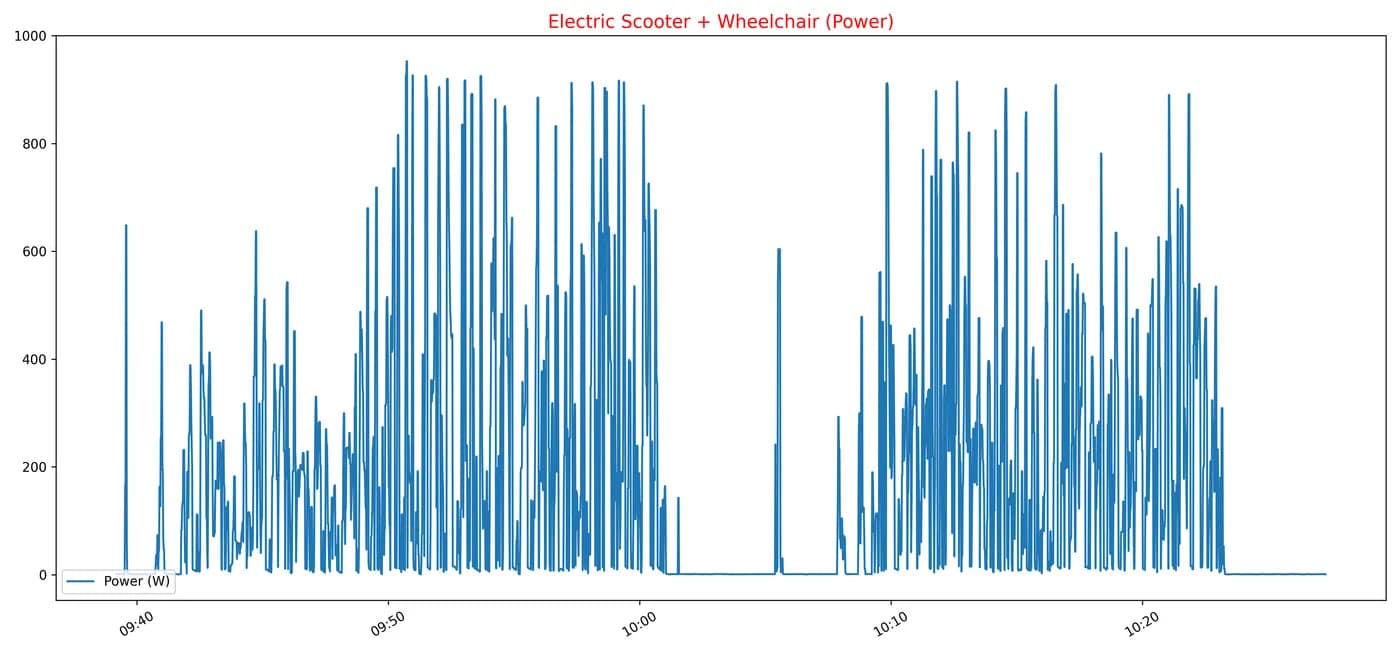
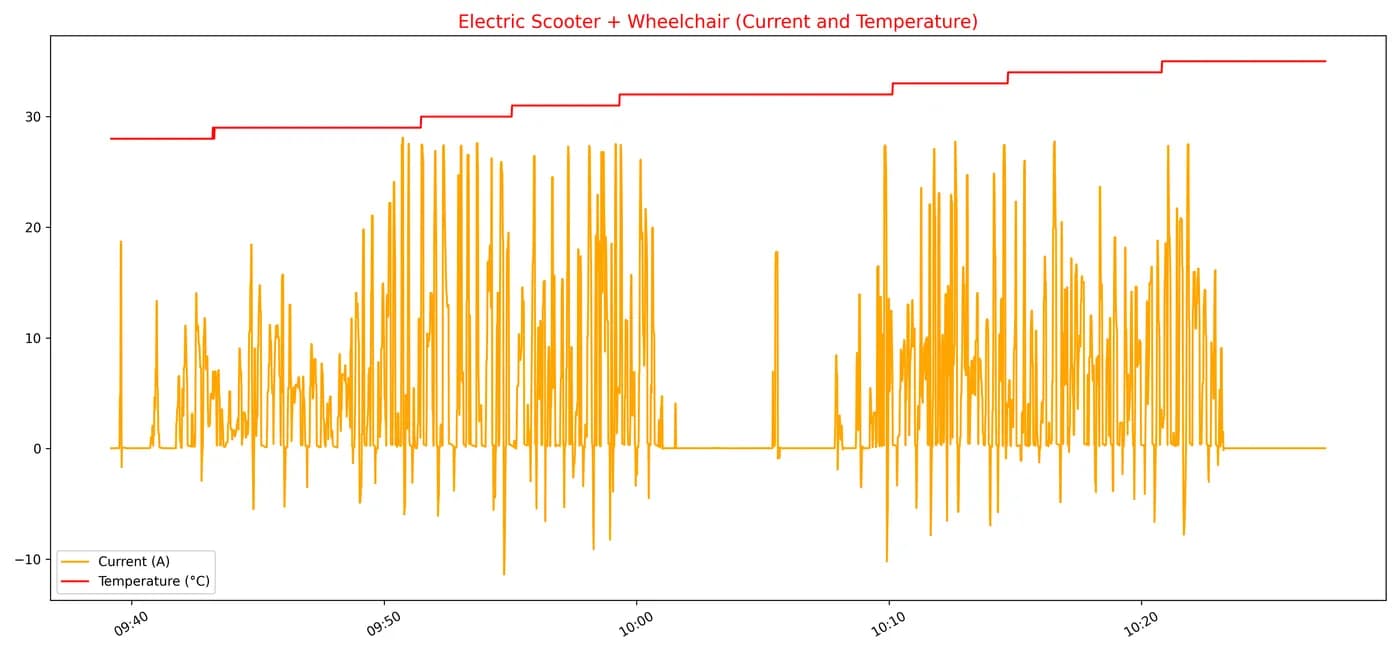
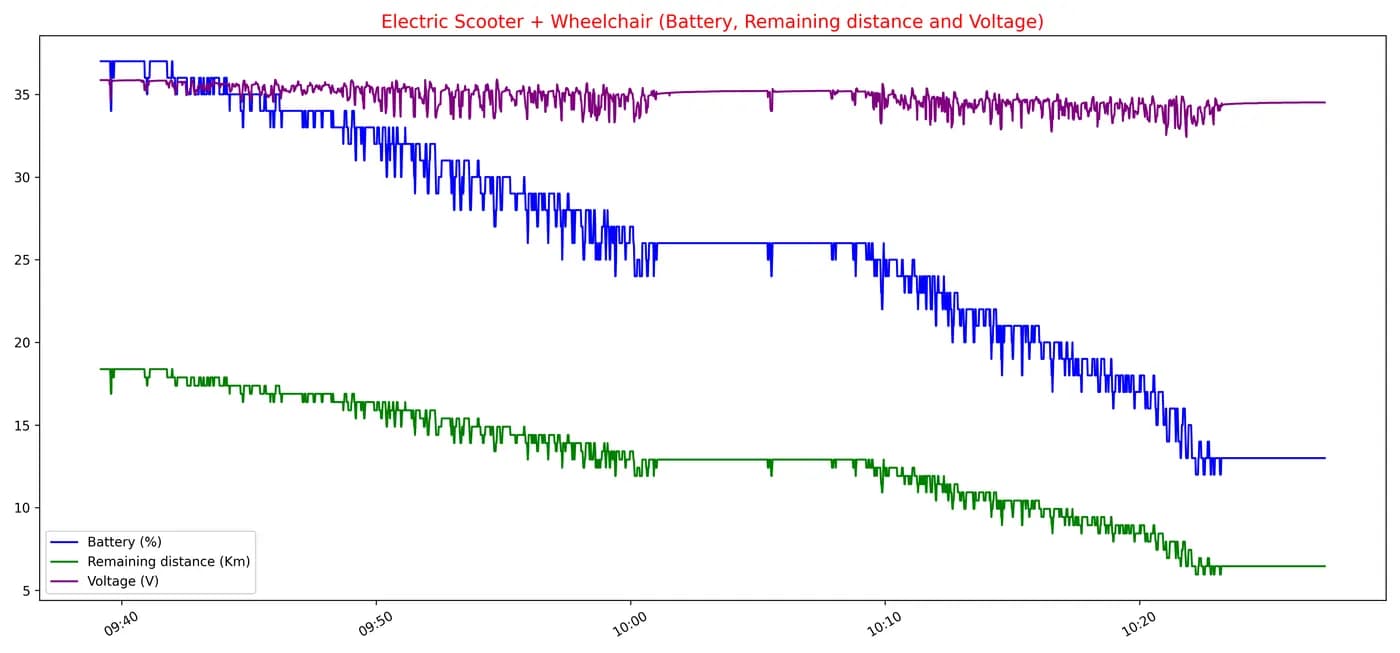
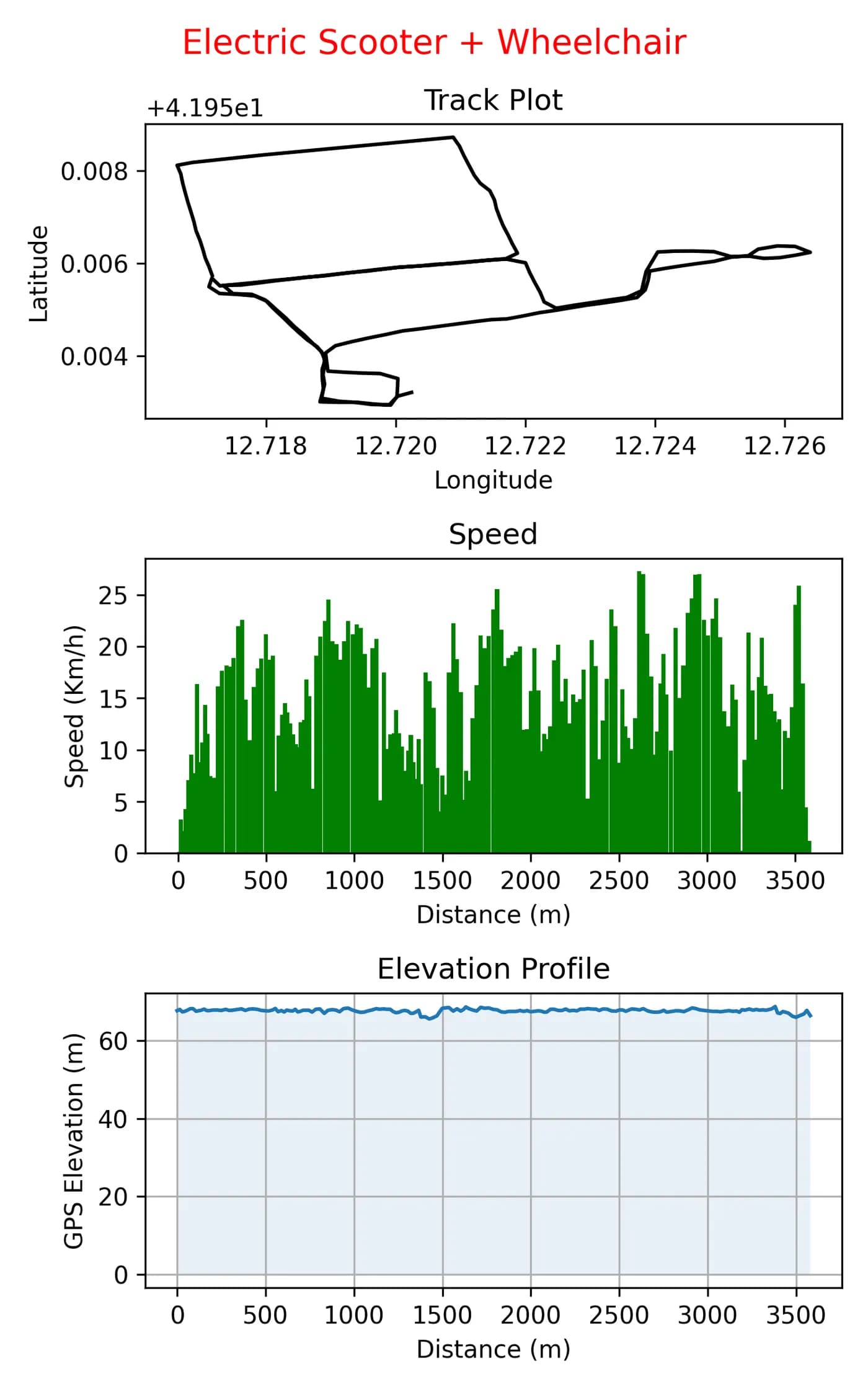
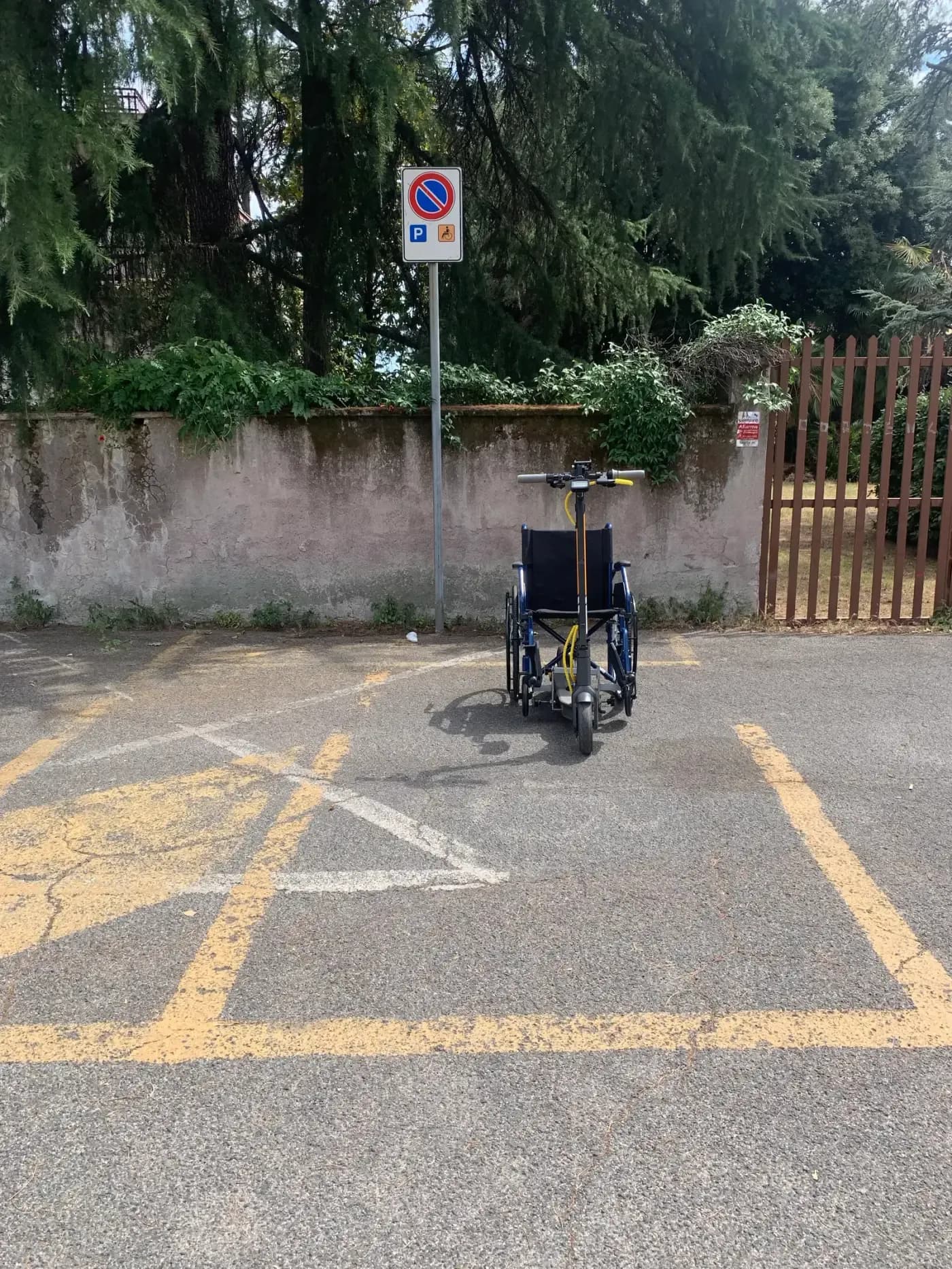
Tests compared the scooter running stock firmware without the wheelchair against the custom firmware coupled with it: current, temperature, battery discharge, voltage and motor power output, plus on-road test drives with GPS tracking. The mechanical coupling and firmware changes did not compromise the vehicle's operation.
From prototype to the road
Materials
Advisor: Prof. Andrea Vitaletti. Folding wheelchair provided on free loan by a.e.o srl.